I’m almost envious of people who go into Uwe Boll movies “cold,” not knowing what they’re in for or what to expect. For the unitiated, Boll is a singularly awful German filmmaker who works primarily adapting B-list video game franchises into ghastly genre flicks. His films feature – right down the line – hillariously bad screenplays, baffled-looking miscast “stars” apparently selected at random (let’s put it this way: If he was making movies in the 70s, Captain & Tenille and Ceasar Romero would feature prominently) and tend to look like the unfinished Pod-Person clones of other well-known movies: He knows what certain types of certain scenes are supposed to look like, the gist of dialogue thats expected to occur… but no real idea how to execute them, integrate them into a story or string them into a working narrative. According to some accounts, his whole career until recently was the result of a real-world “Producers”-style con; exploiting a now-defunct German tax loophole that allowed his films to profit their investors more as flops than they would’ve as hits.
WHYEVER he’s able to keep working, given his choice of subject matter and the inescapable drive of MST3K-primed Movie Geeks to attend and quietly heckle bad films among themselves, Boll has evolved (maybe not entirely unwittingly) into a kind of Interweb-era Ed Wood sans the enthusiasm or decent-guy sympathy (his yet-unreleased film “Postal” is a comedy about 9/11, and features a slapstick for-laughs recreation of the attacks): The release of a new Boll film turns into a movie geek pilgrimage of reverse-reverance. Which I hope explains how it is I came to watch this movie, in the company of good friends as a kind of shared experience of intellectual masochism.
The starting-point this time is a largely-formula Fantasy RPG called “Dungeon Siege,” the title here relegated to it’s own subheading because Boll has re-imagined it as a road-company “Lord of The Rings” thus leaving a paucity of dungeons to be sieged. A generic fantasy kingdom (okay, the Canadian Rockies with some grass huts and CGI castles) is engulfed in a war between an aging King (Burt Reynolds) and an evil Wizard (Ray Liotta) who has marshalled an army of Orc-like “Krugs” to commit acts of disconnected wickedness across the land. The Krugs sack the village and ravage the family of a turnip farmer (Jason Statham) who grabs his trusty machete and boomerang (don’t ask) and sets out to – in his words – “gouge evil from it’s shell.” Matthew Lillard is a cut-rate Jack Sparrow knockoff, John Rhys Davies (who seems to come included in the do-it-yourself-fantasy-movie kit now) is on hand for grave exposition, Leelee Sobieski is his daughter mainly here to (eventually) look rather lovely in a suit of Renaissance Faire armor, and Kristana Lokken (late of “The L-Word” and Boll’s “Bloodrayne”) swings around on vines as the leader of characters best-described as a troupe of acrobatic lesbian Ewoks.
Statham’s farmer, by the way, is actually named Farmer, which momentarily holds the promise that Boll has finally leapt headlong into meta-parody of the RPG genre and that EVERYONE will be named for their character-class… but unfortunately everyone ELSE has names instead of “Warrior,” “Night Elf,” “Red Mage,” etc. Chalk it up to missed-opportunity. Statham is actually the only member of the cast to emerge unscathed, easily maintaining both his dignity and his title as THE top B-action star of his generation. While everyone else is forced to plow through unmanageable lines (“Wisdom will be our hammer…” Reynolds is forced to sagely intone, “and prudence will be our nail!”) and endless cut-rate recreations of “The Two Towers” Helm’s Deep battle sequence, he’s mainly tasked with executing stunt-fights and glowering icily at enemies… things he can probably do by reflex at this point. Matthew Lillard has it the worst in an eye-rolling riff on “Braveheart’s” Edward II. Poor, poor Ray Liotta is made to rant and rave his way through his bad guy turn with a fretful haircut and a sequined cloak. Sad.
This will end up being one of the worst movies of the year, that much is granted. But for what it’s worth Boll manages ONE interesting moment – a pair of Wizards pace around arguing with one another while their swords fight levitating in mid-air between them – and the rest of the film is easily one of the funniest unintended comedies you’re going to see for awhile… provided that “unintentional comedy” is something you can enjoy.
FINAL RATING: 1/10
Category: Uncategorized
REVIEW: Juno
Everything you’ve heard is true. After a long wait, 2007 finally has it’s mandatory “indie sensation:” i.e. a nominally indie-produced ‘quirky’ comedy. A cynical man would point out that, top to bottom, the very prospect of BEING a year’s “indie sensation” is what got this made in the first place – how could you NOT see said prospect just looking at it’s bona-fides: A chuckle-funny coming-of-age bit set smack-dab in “wacky” Flyover Country, riddled with jokey observational humor about suburban eclecticism penned by a former exotic dancer turned screenwriter? Nah, NOTHING about that would start the “Next Napolean Dynamite” glands a-waterin’. Total surprise to all involved, surely.
Yes, a cynical man would point that out… but he’d still like the movie.
Make no mistake: What we’ve got here is “Napolean Dynamite” crossed with “Knocked Up.” The titular Juno McGuff (Ellen Paige from “Hard Candy,” she’s a star, told ya so) is too-clever-by-half 16 year-old suburban she-geek who’s life revolves around two hobbies: Making dry/faux-jaded observations about how quirky the lawn-gnomes-and-Ron-Popeil world around her is and being a (largely unaware) passive-aggressive cocktease toward her boy-who’s-also-a-friend Paulie Bleeker (Michael Sera from “Superbad,” cementing his status as the lord and master of the awkward teenaged love scene.) That second one sets things in motion when, mostly (she says) out of lack of anything else to do, she and Paulie get about the business of experimenting and she winds up “in the family way.”
Let’s get the elephant in the room out of the way: YES, it’s worth acknowledging that the fact that “Juno’s” world and characters are middle-class and predominantly-white is the main reason why the movie is able to convincingly pull of the psuedo-edgy concept of a high school pregnancy as fodder for a cutsie-poo laffer; and that there’s plenty of people for whom a 16 year-old with a baby-bump is a hard fact of everyday life rather than something else for a smart-alecky tomboy to wax the pop-philosophic about (“They call me the Cautionary Whale!” wakka-wakka-wakka!) Fine. Acknowledged. Now take the elephant out back and shoot it, ’cause that’s neither here nor there: In the context of the movie this is a learning experience and a through-way to observe relationship dynamics. That’s it. Juno has a capable support-structure, an understanding family and this isn’t going to ruin her life. Sometimes, that’s how it works out.
What makes this all work is that the film slowly reveals itself to be doing something you’re not necessarily expecting from an “everyone-else-is-such-a-dope” teen girl starrer penned by a writer who named herself Diablo Cody (who’s holy-shit cute, by the way): Giving Juno’s too-hip-for-the-room smugness a gentle kick in the ass. She’s positive that she can just have the baby, give it up for adoption to a well-off couple and get right back to life unfazed. The young couple in question meet her exacting standards easily – well, at least the husband (Jason Bateman) does: He’s a songwriter still dreaming of the rocker’s life with a cool taste in music who strikes her as a fellow hipster. The wife (Jennifer Garner, who’s acting ability I MIGHT now owe an appology to) is a bit of a plastic control-freak who rubs her the wrong way.
See, in a lesser movie, these characters would be the ones with something to learn from wise-beyond-her-years Juno – but this isn’t a lesser movie, and it’s Juno who’s got some things to learn. Namely that she might NOT be a master-observer able to instantly size-up everyone and everything completely; and that there might be more to someone’s worth than the approximate level of their hipness. Oh, and the REALLY difficult one: That she might need to drop the smug act altogether in order to actually appreciate certain people in her life – mainly Paulie, who probably-sorta-kinda-maybe loves her.
This is a good, sweet little movie that’s using a little bit of indie-quirk to wash down a whole lot of genuine heart. You already know that everyone likes it, so do I, so will you.
FINAL RATING: 8/10
REVIEW: One Missed Call (2008)
(Hey, kids, wanna know a great shorthand for perusing movie reviews online? If the movie in question is a remake of a popular or noteworthy earlier film, and in the FIRST SENTENCE of the review-proper you observe the words “the original” OR the name of the earlier film’s director, the new one PROBABLY sucks.)
Setting out to remake a movie from Takeshi Miike (ahem. See above.) is one of those endeavors that almost nobody can truly succeed. The things that make the Japanese art-shocker auteur consistently worth paying attention to are the very same things that can’t (and shouldn’t) be replicated. Gifted with a staggering natural filmmaking talent and a superhuman level of efficiency, Miike (whom you may recognize as the spooky Japanese Businessman character briefly encountered by the heroes of “Hostel”) typically makes anywhere from three to five feature-length films a year. He works almost-exclusively in familiar, formula-dominated genres (Yakuza gangster epics and horror flicks especially,) utlizing the mutually-understood familiarity of the audience with the cliches and formulaic beats as the foundation for surreal dream-logic, out-of-place-on-purpose slapstick, eyeball-searing violence and flight-of-fancy digressions. He’s said that he feels an entire movie is worth making even if it’s just needed to set-up and justify ONE great shot; and as proof his filmography includes several seemingly straight-faced, traditional action pictures or serious dramas which veer suddenly and without a SHRED of prior indication into gonzo scifi/fantasy insanity seemingly for the singular purpose of giving the assembled audience pie in the face. I firmly believe that watching his astounding cop vs. gangster masterpiece “Dead Or Alive” for the first time is one of the closest things to a transcendant religious experience I’ve ever had at the movies or elsewhere.
And within all that lies our problem: Takeshi Miike’s films succeed because they are seat-of-your-pants endeavors made with great speed and primarily driven by a singular creative force; and (sometimes for better, sometimes for worse) studio filmmaking is the exact opposite: Thought-and-rethought products assembled slowly and methodically by committee. Basically, any studio remake (regardless of nationality) of a Miike movie is, by nature, going to strip away the signature insanity – and when you do that, you’re usually going to be left with a pile of cliche’s: Take the horrifying physical violence and psychological torment out of “Audition,” for example, and you’ve just got another boring stalker movie.
Sadly, this is EXACTLY what’s happened with “One Missed Call.” What happens when you take a movie that originally existed only to be a mad-genius’s wacky take on the done-to-death “J-Horror” cycle of “Ringu” (aka “The Ring”) wannabes and slice off every shred of madness AND wackiness? That’s right, you get just another “Ring” wannabe for the pile. It’s a big, obvious collection of stuff you’ve seen in dozens of other movies, and hardly any of it has been used in anything resembling a new or creative way.
Basic idea? A pissed-off ghost (no prizes for guessing age, gender and general-motivation within five freaking minutes) is using a seemingly-benign symbol of modern techno-culture as a force for murder and mayhem. In this case, the scaaaaaary devices are cell-phones, on which victims-to-be recieve phonecalls from their near-future selves recording their dying words. When the time comes, the victims catch glimpses of seemingly-random imagery (generic ‘spooky people’ with the “Jacob’s Ladder” vibration-blur going on) then buy it in dissapointingly mudane ways, signaling ‘the end’ by posthumously coughing-up peices of hard candy. (Footnote: Y’know what would be more fun than this? A slasher-movie where the bad guy slits people’s throats and leaves giant pieces of Pez in the wound.)
You’ll be unsurprised to learn that the more “out-there” visuals have a unifying explanation that the film goes to ridiculous lengths to justify, only to ultimately fail, (in order to “allow” the film to rip-off yet ANOTHER element from “The Ring,” a jar of milipedes is dropped into a flashback sequence with bluntness almost admirable in it’s dumbness,) that creepy-babies, eerie old ladies, big-eyed prophetic moppets, “dancing” ghosts, old-fashioned hospital equipment and heroes who don’t own enough lamps all make their requisite appearances. Granted, some of this is just repeating equally-formulaic beats from the original film, but without the heedless “what the HELL!!??” sensibilities that Miike uses formula as a shortcut toward – It’s like eating a ready-made pie crust raw, cold and unfilled.
Our leads our Shannyn Sossamon as one of a group of ghost-targeted twenty-somethings with an easy-to-guess past trauma (gee, wonder if it will ironically mirror the trauma of our cellular spectre?) and Edward Burns as a cop who’s sister’s freshly-discovered corpse yielded one of the trademark candies. They run into eachother by chance and come to not only understand but fully accept as fact the supernatural presence in their lives with bewildering speed, as though the movie is so proud of it’s parade of generic jump-scares it wants to hurry the plot up to show you. How bad are we talking about? At one point, one of the leads ACTUALLY SAYS to the other “We’d better split up, we’ll cover more ground” or some variation thereof. Really. At that point, I started hoping that they were actually paying homage to Miike with a pie-in-the-face of their own and that this “scary” movie was actually going to end with a talking dog yanking a rubber ghost mask off the crotchety owner of an abandoned amusement park… but no such luck.
Directing duties fell to Eric Valette, a French filmmaker whom I’m told made some fascinating genre shorts in his home country. Whatever chops he might have aren’t on display here, but perhaps we’ll get to see something more promising from him with the survival-horror video game adaptation “Clock Tower” (think “Resident Evil” by way of Dario Argento) which he’s slated to make next. I’m not sure it’s fair to judge him by this film alone, as I’m not sure that ANY filmmaker is capable of making “omigod the shadow in the upper frame is a ghost!!!!” scares actually scary anymore, let alone any of the other old-hat tricks this one throws in.
Ditto for the screenplay by Andrew Klavan, a really fine novelist/columnist who really ought to be getting better work than this. Much like the direction, the scripting here isn’t so much bad as it is inescapably pointless: Every beat has been seen so often before it’s almost unfair to ask ANYONE to come up with anything new to do with them.
This obviously wasn’t made with bad intentions: It plays things mostly straight, there’s no obnoxious comic relief, and it’d free of all but the most “well, DUH” of moralizing messages. Still, execution is what matters, and on that end “One Missed Call” is probably the worst techno-horror offering since “White Noise.”
FINAL RATING: 3/10
I Would TOTALLY See This Movie…
…if it were real. Wouldn’t you??
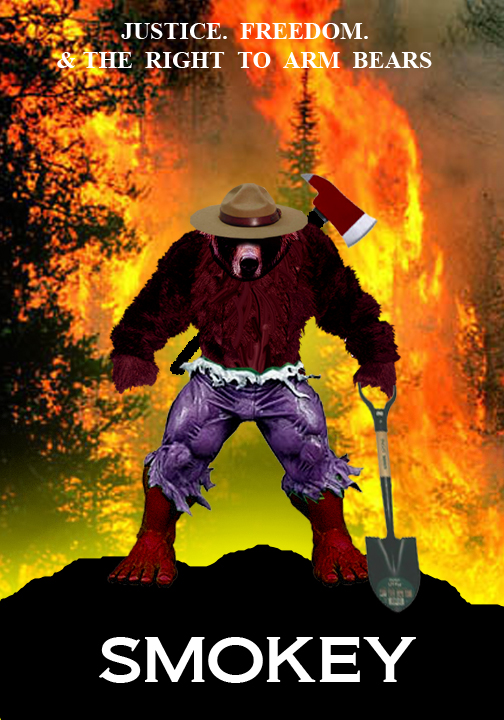
So… busy Christmas, etc., so please forgive recent lack of new posts. Three mini-reviews of stuff I saw over the down-time are below, linkable here:
http://moviebob.blogspot.com/2008/01/mini-review-kite-runner.html
http://moviebob.blogspot.com/2008/01/mini-review-i-am-legend.html
http://moviebob.blogspot.com/2008/01/mini-review-walk-hard-dewey-cox-story.html
MINI-REVIEW: The Kite Runner
Based on Khaled Husseini’s bestselling book, “Kite Runner” is a story of Afghanistan’s collapse from the just before the Soviet invasion to the final indignities of Taliban rule fitted into the familiar outlines of, in no particular order, Boy Becomes A Man stories, Immigrant Life stories and Redeeming Old Sins stories. The familiarity is the whole point – i.e. to give a predominantly Western audience insight into an “alien” culture by way of paralells, but there’s a line between ‘familiar’ and ‘predictable’ that it comes a little too close to crossing. All said, though, some fine acting and genuine heart make up for most of it.
By shorthand, it’s the story of a friendship between two Afghan boys: Amir, a rich kid who wants to be a writer, and his best friend (and son of his father’s servant) Hassan. Amir is a sensitive sort, while Hassan is a tough-hewn scrapper who does the fighting for both of them. When opportunity arises for Amir to return the favor and rescue Hassan from a horrible brutalization by a group of bullies, his cowardice gets the better of him. Hassan doesn’t know, but Amir’s guilt at his own failings leads him to cruelly drive his friend away rather than deal with the shame. Soon thereafter, Amir himself is driven away along with his father by the Soviets. He grows to maturity in America, marrying a fellow Afghan immigrant and doing his father proud as a college graduate, but his guilt gnaws at him still – until he gets an unexpected chance at real redemption… one that means journeying back to his homeland and facing down the merciless Taliban face-to-face.
Once you figure out the lesson the film wants Amir to learn, it’s not hard to plot the course of events from there on out. But predictability is mostly forgivable here, since it’s all so genuine-feeling and well put together… with the exception of Act 3, in which the circumstances of Amir’s redemption seem to line up so perfectly it starts to feel FAR too serendipitous. It’s not the definitive story of Afghan life before and after the fall it wants to be – that will be made much later, probably IN Afghanistan – but it’s a fine try.
FINAL RATING: 7/10
MINI-REVIEW: I Am Legend
This is one-half of a pretty decent movie, unfortunately it’s also one-half of a really awful one.
The good half occupies most of the first and second act, with Will Smith doing the last man on Earth thing in a slowly deteriorating, deserted Manhattan in what’s at least a tonally-faithful reworking of Richard Matheson’s seminal scifi novel. A supposed cure for cancer has instead wiped out the human race, and aside from Smith’s Robert Neville anyone who survived is now a shrieking, light-phobic mutant/vampire. Good start.
Sadly, the film doesn’t have the stones to follow Matheson’s work through to it’s grim, pitch-black final twist. So instead we get one of the most awful third-acts to a good movie since I don’t remember when; as what started out as a damn well-mounted work of apocalyptic scifi with a grand and insightful turn of man-going-crazy acting from Smith get’s tossed out the window in favor of thuddingly moronic religious tripe and a bunch of nonsense about butterfly-symbolism; not helped by some of the worst looking CGI creatures you’ll see this year. A total disappointment.
FINAL RATING: 4/10
MINI-REVIEW: Walk Hard: The Dewey Cox Story
“Walk Hard” has one big-idea observation – that “musician biopics” are all telling the same basic story – and two running gags at it’s expense: Characters bluntly sounding out obvious, familiar story points and cartoonish exaggerations of the uber-dramatic parts of “Ray” and “Walk The Line.” Turns out, that’s really all it needs. That, plus a truly epic lead turn by John C. Reilly, the great character player who’s been a welcome sidekick in everything from “Boogie Nights” to “For Love of The Game” to “Tim & Eric Awesome Show Great Job” and now finally gets to play the hero. It was worth the wait to see.
This is smart, well-observed skewering of it’s genre and it’s most famous recent entries, and perhaps best of all the music is actually REALLY good even when it’s being funny. Dissapointing boxoffice aside, this’ll be remembered as one of the funniest spoofs in recent memory once it gets into TBS/TNT rotation – or even sooner once the “Adult Swim” crowd gets hold of it.
FINAL RATING: 9/10
REVIEW: Alien Vs. Predator: Requiem
Hey, Hollywood genre-producer guys? If you are considering making a movie in which two warring teams of otherworldly creatures stage their conflict down here on Earth and get it in your heads to focus chiefly on the “human story;” speaking as one of your CORE demographics, allow me to paraphrase Mssrs. Simon and Garfunkle and ask that you hear my words that I might teach you: Nobody who’s going to see this movie GIVES A SHIT about the humans or their story. This kind of back-asswards overthinking already resulted in “Transformers,” the worst movie of 2007, and now results in “AVP:R,” an entirely worthy challenger for the title.
Oh, and directors “The Brothers Strause?” I appreciate your fine contributions to the industry as visual effects supervisors on some really wonderful movies. I also appreciate, more to the point, that you probably went to film school and know that framing practical-effects creatures in near-silhouette darkness makes for great production stills and lets you say your making a “classic”-style monster movie in interviews… but here’s the thing: EVERYBODY already knows what the Aliens and Predators look like. This is the SEVENTH installment of the now-combined franchise. You’re not being visually clever, your just making your movie SUCK MORE.
Here’s how we got here: More than a decade ago, an art designer or two on “Predator 2” thought it’d be a fun background gag to include the skull of the title monsters from the “Alien” movies among the alien big-game hunter’s trophy collection. The gag spawned a premise – “whoa, the Predator hunting the Alien? AWESOME!!!” – that begat a series of video games, comic books and fandom flights-of-fancy that made an actual FILM based on the idea innevitable as soon as the still-ongoing “Alien” series officially hit the wall; which happened in Part 4.
Enter well-meaning schlock-auteur Paul W.S. Anderson, who had won the hearts of genre fanboys with “Event Horizon” and lost it with “Resident Evil,” to step up (and get “it” back) with “Alien Vs. Predator,” a big blow-out B-movie epic which all-told was probably YARDS better than anyone should’ve reasonably expected: Tons of fun, tons of action, a plausible in-continuity reason to “officially” combine the plots of the two franchises and, most-importantly: Scene after scene of Aliens VERSUS Predators. Predators wailing on hordes of Aliens with high-tech hunting gear? Done. Predator infra-red vision to see who’s carrying a Chestburster? Done. Predators and Aliens slamming eachother around in bad-ass hand-to-hand brawls? Done. Predator versus a full-charging rampaging Queen Alien? Even THAT was done! All that plus Lance Henriksen and a fun re-visitation of “Chariots of The Gods” for no extra charge.
So, in the immortal words of William Hurt in “A History of Violence“…. “How do you fuck that up?”
The sequel opens immediately following the first film, as a Predator ship experiences a nasty Alien outbreak and crashes into a forest surrounding a rural American town. In response, a lone Predator makes tracks for Earth on a mission to eradicate the threat and cover up all evidence, bringing with him a helpful cache of weapons and a MORE helpful total disregard for how many humans he also has to slay in the course of his mission. A wrinkle is added in that the nominal “alpha male” of the rapidly-expanding Alien brood is “Predalien” – a hulking half-Predator/half-Alien bruiser borne of the Aliens’ habit of assimilating the characteristics of the species they symbiotically “hatch” from. The small-town Americana under monster-infestation setting is obviously supposed to put us in the mood of “Gremlins” or “Monster Squad,” but the execution almost-immediately reeks of lesser offerings like “Masters of The Universe” or “Pod People.”
You’d think this kind of setup would be a golden opportunity for an action movie to completely cut loose: The premise explains itself visually in an instant (monster with dreadlocks has to kill all the monsters with big phallic heads) and your instantly dynamic-looking lead characters are all FX creations TOTALLY maleable to filmmaker control (latex rubber doesn’t have a “bad skin day”) who don’t speak any recognizable language. In other words, a film with a perfectly plot-appropriate excuse for dialogue-free FX-spawned carnage. So, naturally, the first thing the film does is pile on the humans and the superfluous story points: Two deliquent brothers, two would-be girlfriends, a bunch of high-school bullies, some cops, etc. Getting the most attention are a little girl and her fresh-home-from-Iraq soldier mom, because it’s a franchise tradition that while a Predator will do in a pinch, the only REAL natural enemy of the Alien is a butch mother-figure in a tank top.
The “R” in “AVP:R” officially means “Requiem,” but it’s REAL reason for being is as a direct advertisement that this sequel hits theatres with an appropriate R-rating, one of the major complaints against the original PG-13 film. These are R-rated characters, yes, so this is very appropriate… but all the gore in the world can’t help when it’s so poorly photographed and so damned dark all the time. The only scene that honestly seems to earn this designation comes when the Predalien and his fellows make a “snack run” to a hospital Maternity Ward. Gruesome stuff, to be sure, but at this point the film has already lost all but the most undiscerning viewer’s interest. PG-13 or not, even the THEATRICAL CUT of the original movie had ten times the solid monster-vs-monster action of this sequel.
Everything is either shot in total darkness or total darkness with a silhouette-creating spotlight behind it, so we never get a good look at ANY of the title monsters or even the megahyped Predalien. Bad CGI, worse acting and a total lack of editorial coherence conspire to craft a film that isn’t interesting to look at at any point of it’s running time. It’s an absolute dud, no two ways about it, and a truly depressing dissapointment.
FINAL RATING: 2/10
THE TEN BEST MOVIES OF 2007
Tedious and predictable, I know – and for a change I’m not talking about “Transformers.” No, it’s list time. No big difference from everyone else here, my 2007 Top Ten, organized last to first, with the usual disclaimer that as I’m not a professional film critic nor located in France, Los Angeles, New York or Austin there are certain “big” entries I haven’t gotten to see yet: Principally “Kite Runner” and “There Will Be Blood.”
One additional disclaimer: The ACTUAL best film I saw in 07, in addition to being easily my favorite of the year, was Paul Verhoeven’s “Black Book.” However, as it was technically released and Oscar-submitted in 2006 I did not officially include it. You, however, should still see it as it’s a future classic and the best movie The Mad Dutchman has made since “Robocop,” which incidentally is indeed my favorite movie ever.
So, on with it:
10. DRAGON WARS
Around here, movies are graded by how they PLAY, not on their intentions. Hyung Rae-Shim apparently intended his megabudget, nine-years-in-production “Dragon Wars” as South Korea’s foray into the realm of global “tentpole” blockbusters, but the end result is something else entirely: Cheezy-as-hell, bafflingly-silly and, well.. something simply beautiful to behold – a real, honest-to-god, no-irony-about-it Asian Giant Monster Movie with all the outsized imagination, near-surreal incoherence and seemingly-shanghai’d actors any genre entry worth it’s salt could ever want. Giant snakes constrict skyscrapers, dinosaurian behemoths launch shoulder-mounted missiles, winged reptiles dogfight with attack choppers and armored Feudal Korean demon knights march through hails of US Army bullets. It’s the visual poetry that monster-loving boys devour, the stuff of which Movie Geeks are born.
9. RESCUE DAWN
In a year where the American political scene tore itself apart as Left and Right battled to see who could make a more astonishing asshole of themselves preening and posturing about the meaning of “patriotism” and what it “really” means to love their country; a German fringe-film icon and a British actor teamed up to release the most honest, simple (but not simplistic) and genuine ode to The American Spirit in years… in a fact-based Vietnam movie, no less! Shooting a man-vs-wild epic of psychological breakdown and physical triumph smack dab in the Forest Primeval with a star who lives and breathes physical transformation, Werner Herzog is in his element; while Christian Bale may finally have met the director who’s intensity can match his own.
8. EASTERN PROMISES
David Croneberg cuts every single shred of fat from the Gangster Movie formula and hands us the leanest, sharpest and most efficiently-satisfying “crime-picture” in years. Not a frame, line, scene or idea is wasted in this narrative Blitzkreig of a Russian Mob drama, with Viggo Mortensen topping himself yet again, Naomi Watts oozing sex and sympathy and Armin Muehler-Stahl in an Oscar-worthy bad guy turn for the ages.
7. BEOWULF
Barbarian Fantasy finally came roaring back to life in the wake of Zack Snyder’s super-fun “300,” but Robert Zemeckis’ bawdy 3D animation-for-adults epic was the more satisfying mind-bender; with awesome action scenes, a slick script from Roger Avary and Neil Gaiman and a vision so grandly realized that jaw-dropper monster battles can compete with a near-naked Angelina Jolie for arousal-inducing spectacle.
6. THE SIMPSONS MOVIE
After changing television, the sitcom, animation and pop-culture history forever over the course of 20-and-counting brilliant seasons, “The Simpsons” finally manage to hit theatres big time by going back to basics: Comical eco-disaster in Springfield, recklessly-impulsive nuttiness from Homer, smart-alecky antics from Bart and Lisa, put-upon stoicism from Marge. Took long enough, and every bit worth the extra polish.
5. GRINDHOUSE
Quentin Tarantino and Robert Rodriguez turned the IV-drip off and finally gave their exploitation-film creative power source to audiences straight-up. The result? A work of Movie Geek nirvana the re-drew the line between Those Who “Get It” and Everyone Else. Zombies, car chases, babes, blood and beasts pack 200 movies worth of memorable moments into 2 movies worth of running time.
4. REIGN OVER ME
Mike Binder at last crafts a movie that lives up to his ambitions and unique view of the world; a heart-rending examination of the personal crisis that must be solved and the personal problems that probably can’t be amid the most affecting vision yet of Post-911 New York existance. Adam Sandler sheds every scrap of armor and irony as a man slowly killing himself in an attempted descent into madness, while Don Cheadle re-establishes his considerable dramatic credibility as the only man who may be able to bring him back… or at least help him learn to exist where he is.
3. ZODIAC
David Fincher makes his best film, and possibly the best Serial Killer mystery ever, breaking down in mezmerizing detail the maze-like history of the hunt for the Zodiac Killer. Robert Downey Jr., Mark Ruffalo and Jake Gyllehaal give some of their best work ever amid flawless period detail and some of the year’s most intense moments. A total package from top to bottom.
2. THE MIST
It’s Frank Darabont doing John Carpenter doing Stephen King doing H.P. Lovecraft, and it’s a top-flight creature feature masquerading as a pitch-black human drama… or maybe thats the other way around. Whatever else it may be, “The Mist” is dynamite moviemaking no two ways about it. Thomas Jane leads the good guys as they battle a monster-concealing weather anomally that comes complete with land-squids, giant bugs, flying lizards… and a rapidly-unraveling religious nutcase who might be more dangerous than all of them.
1. GONE BABY, GONE
All is forgiven for Ben Affleck, onetime punchline and current maker of the Best Movie of 2007. An authentic, grim and harshly-realistic vision of Boston crime and punishment; framed around a private detective (Casey Affleck) who’s moral sturdiness gets put to an ultimate test investigating the conspiracies that spin out of a little girl’s kidnapping. Featuring stellar work from all involved, and a breakout turn from Amy Ryan as an unlikable yet human mother at the center of the storm.
REVIEW: Charlie Wilson’s War
In the opening credits of “Charlie Wilson’s War,” an Afghan Muslim in traditional robes recites prayerss on his knees in stark black sillhouette against a picture-book starry sky, the moon framed in the upper left-hand corner in the perfect crescent shape of the traditional Islamic holy symbol. The figure then stands, revealing in his hands a shoulder-mounted rocket-launcher which he arms, aims and fires… straight at the audience.
It’s probably the most jarring, politically-incorrect Title Sequence since James Bond starting projecting his credits onto reclining, gun-toting nude models; but it sets the tone of the piece perfectly: Here’s a politically-saavy “dramedy” that approaches Cold War skullduggery, covert wars and the rise of terrorism with all the same martini-lubricated flippancy with which “The Thin Man” series once treated murder-solving. It’s three main characters start off as, respectively, a booze-guzzling, skirt-chasing, favor-trading Congressman (Tom Hanks,) a blunt, bitter, bullheaded spy (Philip Seymour Hoffman) and an ice-blooded, manipulative, hypocritical religious zealot (Julia Roberts) and more-or-less remain that way – the tale isn’t so much about their growth (or lack thereof) as it is about them finding a situation where their eclectic skill-sets were actually useful in the doing – or at least attempting – of a genuine good.
Hanks is Charlie Wilson, a Reagan-era Texas Congressman who lives to indulge the benefits of representing a district small and well-off enough to not need anything of him: He goes to the best parties, sits on the most important committees, has the most important friends. His office is staffed entirely by alarmingly beautiful secretaries who could each easily be mistaken for the strippers and Playmates he staffs the REST of his life with. Roberts is Joanna Harring, a Texas billionairess who’s “found Jesus” and committed her fortune to the cause of beating back The Godless Commies at any cost – including breaking the odd Commandment, circumventing the odd international law and sleeping with the odd Texas Congressman. Hoffman is Gust Avrakatos, a world-weary CIA sad-sack who can’t quite believe that THESE two people are the magic-ingredients needed for the operation he’s been DYING to launch, but he’s willing to try it.
The problem with the Cold War is that Americans, now more than ever, prefer their history to A.) have a narrative and B.) have a SIMPLE narrative. We like clear wins over unambiguous evil decided by grand, heroic gestures. Well, the Cold War didn’t work that way, it worked this way: Two superpowers stood across from one another, fists balled up, sneering and eyes ablaze like mortal enemies at the midpoint of “Dragonball Z” season, until the side that didn’t believe in money, er… ran out of money and had to give up. That just won’t do. So ever since, dwellers of the political “Right” have been telling themselves (and anyone else who’ll listen) a reassuring bedtime story about how Ronald Reagan, Margaret Thatcher and The Pope beat down The Eeeeevil Empire all by themselves. To an extent, “Charlie Wilson’s War” represents a late-in-coming attempt by dwellers of the political “Left” (screenplay by Aaron Sorkin!) to get a bedtime story of their own out of it – one in which a girl-crazy, super-slick Southern Democrat (hmm… who’s THAT supposed to remind us of?) used his Austin Powers-style diplomacy to turn the Afghan Invasion into Gorby’s Waterloo. Both versions are, of course, staggeringly-simplified history-as-mythology, and so long as the movie is entertaining there’s really nothing wrong with it.
The film imagines Wilson as a good-time party boy who undergoes a gradual shift-of-focus as the images of Soviet-overrun Afghanistan start to trickle across his radar. Soon enough, he’s realizing that his cushy seats and well-made friends on precisely every committee one would need to run a covert war; right around the time that Roberts’ Harring starts asking him to do just that. Gust fills in the final piece of the puzzle, providing the services of himself and a small cadre of fellow action-hungry CIA vets looking to actually do something about the Russians. It’s Shadow Government cloak-and-dagger warmaking as bachelor party planning, with Charlie as the sly-dog host who’s sentimental enough to wrangle the vote of a key legislator by flying him to visit a blighted Afghan refugee camp; but worldly enough to know that nothing beats a talented bellydancer to break the ice during a tense meeting between Israeli, Pakistani and Egyptian arms dealers.
Given that it’s a politically-themed film about the Middle East primarly made by famous Democrat supporters, there’s been the usual predictable outcry from “conservatives” about the film – apparently, only THEY wish to be allowed the privilige of cherry-picking Cold War history for self-affirmation – coming with the usual claim that it’s “propaganda” (which is sorta true, but I don’t need to hear that from the folks who’ve been hyping “In The Face of Evil” for two damn years) and that it ultimately “blames America for terrorism.”
That last part is especially false, and in a way the fact that it never ONCE comes anywhere CLOSE to doing that is something close to a problem with the final film: It’s third act seems marginally truncated, as though it’s building toward a definitive “oh by the way” about what some Afghanis may or may not have gone on to do with all those shiny new guns they still had once the Russians had been expelled that never really arrives. In fact, there’s only ONE reference to you-know-what-future-date, a subtle but chilling aural detail that drifts by in the background noise of a single key scene.
Still, a just-this-short-of-great third act doesn’t keep the rest of the film from great entertainment, the sort of grand smart-dialogue-for-everybody ideal that Sorkin excells in when he keeps the moralizing under control. Mike Nichols is a veteran who knows his way around a movie and manages the trick of making Sorkin-specialty walk-n-talks, cigars-and-brandy scheming, big-scale Afghan action scenes and the verbal slapstick of Charlie’s secretary-squad all seem like parts of the same tonal piece.
This is a light, breezy, sharp-witted and whip-smart comedy that manages to encompass the realm of politics without being either too much of an attack OR too much self-congratulation. Oh, there’s a little of both to be sure; but it’s prodding with elbows – not daggers. If you come out of “Charlie Wilson’s War” feeling either like you’ve been “attacked” or like patting yourself on the back; chances are you need to get over yourself.
FINAL RATING: 8/10

